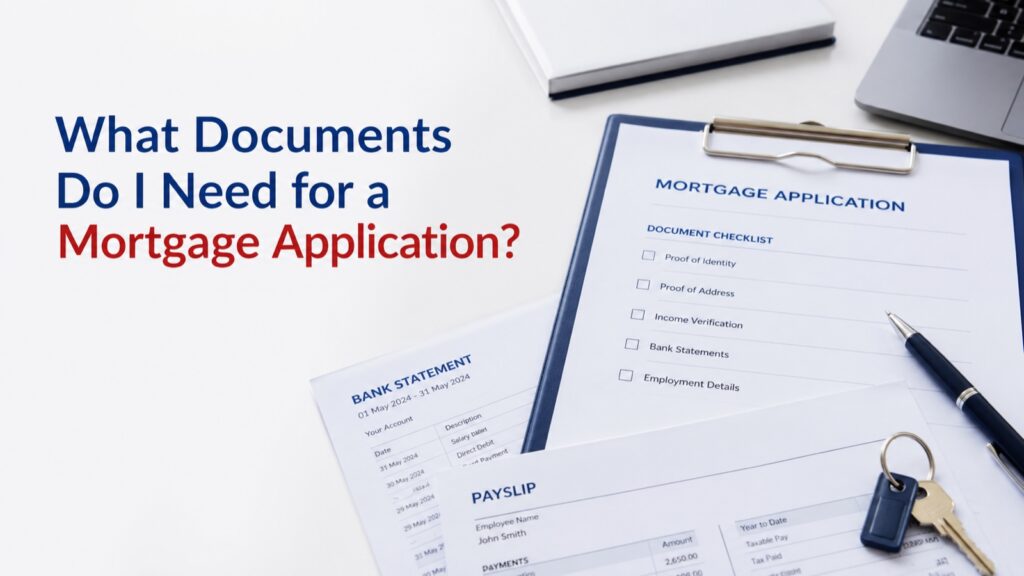
Applying for a mortgage can feel overwhelming, especially when it comes to gathering the right paperwork.
Whether you are buying your first home, moving property, remortgaging, or investing in a buy-to-let property, lenders need to check your identity, income, affordability, deposit, and financial position before making a decision.
This guide explains the key documents you may need for a UK mortgage application, including residential mortgage documents, buy-to-let mortgage documents, fixed rate mortgage applications, variable rate mortgage applications, and paperwork for salaried or self-employed applicants.
Why Do Lenders Ask for Mortgage Documents?
Before a lender agrees to offer a mortgage, they need to understand whether the borrowing appears affordable and suitable based on their criteria.
A mortgage is a major financial commitment, so lenders usually review:
- Your identity
- Your current address
- Your income
- Your employment status
- Your bank statements
- Your credit history
- Your deposit source
- The property details
Having your mortgage application documents ready can help reduce delays and make the application process smoother.
It also helps your mortgage adviser understand your position clearly before recommending suitable mortgage options.
Documents Needed for a Residential Mortgage Application
If you are applying for a residential mortgage in the UK, whether on a fixed rate or variable rate, lenders will usually ask for several key documents.
These documents help prove who you are, where you live, how much you earn, and whether the mortgage repayments may be affordable.
1. Proof of Identity
Lenders need proof of identity to verify who you are and help prevent fraud.
Common examples include:
- Passport
- UK driving licence
- National identity card
- Birth certificate
- Adoption certificate
Most lenders will ask for valid, clear, and up-to-date identification.
2. Proof of Address
You will also need to prove your current residential address.
Accepted proof of address documents may include:
- Utility bill dated within the last 3 months
- Council tax bill for the current year
- Bank statement
- Credit card statement
- Official letter from a recognised organisation
Your name and address should match the details used on your mortgage application.
3. Proof of Income
Proof of income is one of the most important parts of a UK mortgage application.
Lenders use income documents to assess affordability and understand how stable your earnings are.
Mortgage Documents for Salaried Applicants
If you are employed, lenders commonly ask for:
- Three months’ payslips
- Most recent P60
- Employment contract, in some cases
- Evidence of overtime, bonus, or commission, if applicable
If your income includes regular bonus, overtime, or commission, the lender may ask for evidence covering the last 2 to 3 years.
This helps them understand whether the income is consistent and whether it can be considered in the affordability assessment.
Mortgage Documents for Self-Employed Applicants
If you are self-employed, a contractor, sole trader, or company director, the document requirements can be more detailed.
You may need to provide:
- SA302 tax calculations from HMRC
- Tax year overviews
- Full tax returns, if available
- Business accounts prepared by an accountant
- Business bank statements
- Personal bank statements
- Accountant’s certificate, if requested by the lender
Many lenders usually ask for the last two or three years of trading history, although requirements can vary depending on the lender and your circumstances.
Self-employed mortgage applications can be more complex, so preparing early is important.
4. Bank Statements
Most lenders ask for recent bank statements as part of the mortgage application process.
Usually, you may need to provide:
- Three months of personal bank statements
- Up to six months of statements in some cases
- Business bank statements if you are self-employed
- Statements showing salary payments
- Statements showing regular spending and commitments
Lenders review bank statements to check income, spending habits, financial commitments, and whether the application matches the information provided.
They may also check for:
- Existing loan payments
- Credit card repayments
- Overdraft use
- Regular direct debits
- Gambling transactions
- Large unexplained transfers
Bank statements should be clear, complete, and show your name, account details, and transaction history.
5. Credit Report
Most mortgage lenders run their own credit checks during the application.
However, it can be useful to check your credit report before applying for a mortgage.
A credit report may show:
- Credit cards
- Loans
- Missed payments
- Defaults
- County Court Judgments
- Electoral roll status
- Linked addresses
- Credit search history
Checking your credit file early can help you spot errors and understand what a lender may see.
If there are issues on your credit report, it does not always mean you cannot apply, but it may affect which lenders are suitable.
6. Proof of Deposit
Lenders usually need to know where your mortgage deposit has come from.
If your deposit is from savings, you may need to provide:
- Savings account statements
- Bank statements showing the funds building up
- Evidence of transferred funds
If your deposit is being gifted by a family member, you may need:
- A gifted deposit letter
- Identification from the person gifting the money
- Bank statement evidence from the person gifting the money
- Confirmation that the gift is not a loan
Proof of deposit is important because lenders must understand the source of funds before approving the mortgage.
Documents for Buy-to-Let Mortgage Applications
Buy-to-let mortgage applications are for people buying or refinancing a property that will be rented out.
Because buy-to-let lending is assessed differently from residential mortgage lending, the documents can be more detailed.
You will usually still need:
- Proof of identity
- Proof of address
- Proof of income
- Personal bank statements
- Business accounts if self-employed
- Proof of deposit
For a buy-to-let mortgage application, lenders may also request:
- Details of the rental property
- Expected rental income
- Existing tenancy agreement, if already let
- Rental valuation
- Details of current mortgage, if remortgaging
- Portfolio details, if you already own rental properties
- Landlord insurance details, in some cases
Buy-to-let mortgage criteria vary between lenders, so it is important to check the requirements early.
Fixed Rate vs Variable Rate Mortgage: Are the Documents Different?
The documents needed for a fixed rate mortgage or variable rate mortgage are generally the same.
The main difference is the type of mortgage product you choose, not the paperwork required.
For both fixed and variable rate mortgage applications, lenders will still usually review:
- Your identity
- Your address history
- Your income
- Your bank statements
- Your deposit
- Your credit profile
- Your affordability
A fixed rate mortgage gives you an interest rate that stays the same for an agreed period.
A variable rate mortgage may change depending on the lender’s rate, tracker rate, or wider market conditions such as the Bank of England base rate.
The paperwork remains broadly similar, but the mortgage choice should be based on your circumstances, risk preference, and affordability.
Real-Life Example: Sarah Applies for Her First Residential Mortgage
Sarah is a full-time teacher buying her first home with a fixed rate mortgage.
Before applying, she prepared the following documents:
- Passport
- UK driving licence
- Recent utility bill
- Three months’ payslips
- Recent P60
- Three months of bank statements
- Savings account statements showing her £10,000 deposit
Because Sarah had her documents ready, the lender could review her application more efficiently.
Her mortgage application was processed smoothly, and she received a mortgage offer within four weeks.
This example shows how being organised can help reduce delays during the mortgage application process.
Tips to Prepare Your Mortgage Documents
Getting your paperwork ready early can make the mortgage process feel much clearer.
Here are some practical steps:
- Request payslips, SA302s, and tax year overviews early
- Save digital copies of your documents
- Make sure your name and address match across documents
- Keep your bank statements clear and complete
- Check your credit report before applying
- Organise documents into folders
- Avoid making unexplained large transfers before applying
- Be honest about income, debts, and commitments
- Ask your mortgage adviser what each lender may require
A well-prepared mortgage file can help your adviser and lender assess your case more efficiently.
Summary Checklist: Documents You’ll Typically Need
| Document Type | Examples | Who Needs It |
|---|---|---|
| Proof of identity | Passport, driving licence, national ID | All applicants |
| Proof of address | Utility bill, council tax bill, bank statement | All applicants |
| Proof of income | Payslips, P60, SA302s, tax returns | Salaried and self-employed applicants |
| Bank statements | Recent 3 to 6 months | All applicants |
| Proof of deposit | Savings statement, gifted deposit letter | Applicants using savings or gifted funds |
| Credit report | Personal credit file | Useful before applying |
| Property details | Purchase price, rental income, tenancy details | Buy-to-let applicants |
| Business accounts | Accountant-prepared accounts, business statements | Self-employed applicants |
Final Thoughts
Applying for a mortgage in the UK involves gathering several important documents to prove your identity, income, deposit, and financial stability.
Whether you are applying for a residential mortgage, buy-to-let mortgage, fixed rate mortgage, or variable rate mortgage, being prepared can make the process easier and reduce delays.
Every lender has different criteria, so the exact documents required can vary depending on your employment type, income structure, credit history, deposit source, and property type.
Ready to Take the Next Step?
Unsure which mortgage documents you need for your situation?
Speak to the team at BSL Financial Services for clear mortgage guidance and support with your application.
Whether you are a first-time buyer, home mover, landlord, self-employed applicant, or looking to remortgage, we can help you understand your options and prepare your documents properly.
Contact BSL Financial Services today to discuss your mortgage application.
Your home may be repossessed if you do not keep up repayments on your mortgage.
Mortgage approval is subject to status, lender criteria, affordability checks, and full application assessment.