
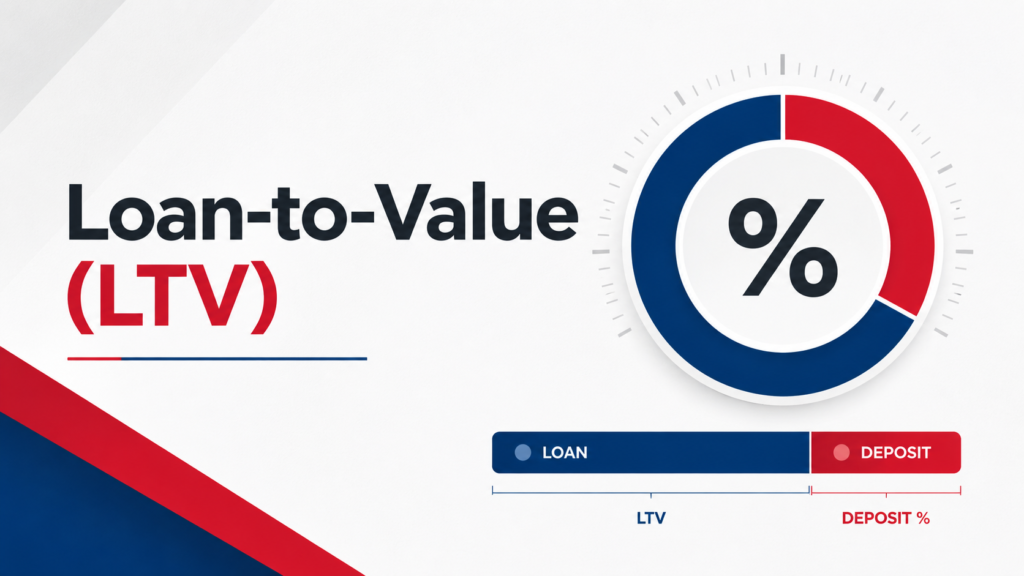
What is Loan-to-Value (LTV)?
Buying a home or an investment property usually involves taking out a mortgage. When applying for a mortgage in the UK, one term you’ll often hear is Loan-to-Value, or LTV. But what exactly does LTV mean, and why does it matter?
In this guide, we’ll explain what loan-to-value is in a straightforward way. We’ll look at how it affects different types of mortgages such as residential, buy-to-let, fixed-rate and variable-rate mortgages. We’ll also share practical examples to help you understand how LTV impacts your mortgage choices.
What Does Loan-to-Value (LTV) Mean?
Loan-to-value, or LTV, is the percentage of the property’s current value that you want to borrow through a mortgage. It compares the loan amount to the value of the property.
The formula is:
LTV = (Mortgage Loan Amount ÷ Property Value) x 100
For example, if the home you want to buy is worth £200,000 and you borrow £150,000, your LTV is:
(£150,000 ÷ £200,000) x 100 = 75%
So, you’re borrowing 75% of the property’s value, and the remaining 25% would be your deposit.
Why is LTV Important in UK Mortgages?
Lenders use LTV to decide the risk of lending to you. The higher the LTV, the more you’re borrowing compared to the property’s value, and typically, the greater the risk for the lender.
This can affect:
- Your mortgage interest rate
- The type of mortgage you can get
- Whether you need to pay mortgage insurance
- How much deposit you need
LTV and Deposits: How Much Do You Need?
Your deposit size is key to your LTV. A larger deposit means a lower LTV, which could make it easier to get better mortgage rates.
Example:
- Property price: £300,000
- Deposit: £60,000
- Mortgage loan: £240,000
- LTV: (240,000 ÷ 300,000) x 100 = 80%
Here, the LTV is 80%, which is often a popular threshold for many mortgages. Some lenders offer their best rates at 60%-75% LTV, while others have mortgages for higher LTVs, but these may have higher interest rates.
LTV in Different Types of Mortgages
| Mortgage Type | LTV Information | How LTV Can Affect the Mortgage |
|---|---|---|
| Residential Mortgages | Standard LTV bands such as 60%, 75%, 80%, 90%, and sometimes 95% | The lower the LTV, the better the mortgage rates you can usually access. |
| Buy-to-Let Mortgages | Generally between 60% and 75% | Some lenders may offer higher LTVs, but at a cost of higher rates or stricter lending criteria. |
| Fixed-Rate Mortgages | Often come with tiered rates depending on your LTV | If your LTV is high, you might pay a higher fixed rate compared to borrowers with lower LTV. |
| Variable or Tracker Mortgages | LTV affects the rates offered | These rates can also move with the market. |
Residential Mortgages
These mortgages are for people buying a home to live in. Residential lenders often have standard LTV bands such as 60%, 75%, 80%, 90%, and sometimes 95%. The lower the LTV, the better the mortgage rates you can usually access.
Buy-to-Let Mortgages
If you’re purchasing a property to rent out, it’s called a buy-to-let mortgage. Buy-to-let lenders may offer different LTV limits, generally between 60% and 75%. Some lenders may offer higher LTVs, but at a cost of higher rates or stricter lending criteria.
Fixed vs Variable Rate Mortgages
Whether a mortgage is fixed or variable rate, LTV affects the rates offered. Fixed-rate mortgages often come with tiered rates depending on your LTV. If your LTV is high, you might pay a higher fixed rate compared to borrowers with lower LTV. The same applies to variable or tracker mortgages, although these rates can also move with the market.
Practical Examples of How LTV Affects You
Example 1: First-Time Buyer
Jane wants to buy her first home priced at £180,000. She has saved £27,000 for a deposit.
- Deposit: £27,000
- Mortgage loan needed: £153,000
- LTV: (153,000 ÷ 180,000) x 100 = 85%
Jane’s LTV is 85%. Many lenders offer mortgages at this LTV level for first-time buyers, but the interest rates may be slightly higher than for someone with 75% LTV. Jane might decide to wait and save a larger deposit to reduce her LTV and access better rates.
Example 2: Buy-To-Let Investor
Mark wants to purchase a buy-to-let property valued at £250,000. He plans to borrow £175,000.
- Mortgage loan: £175,000
- LTV: (175,000 ÷ 250,000) x 100 = 70%
Mark’s 70% LTV is within a common range for buy-to-let mortgages. Because it’s under 75%, Mark may find reasonable fixed-rate mortgage deals. However, if he borrowed £225,000 (90% LTV), lenders might charge much higher interest or ask for additional security.
How Does LTV Affect Your Mortgage Application?
- Lower LTV = Lower Risk to Lenders: You may qualify for lower interest rates and better terms when your LTV is under 75%.
- Higher LTV May Mean More Checks: If your LTV is higher than 85%, lenders may require extra documentation to confirm your affordability and income.
- Some Mortgages Have Max LTV Limits: Certain deals are only available up to a specific LTV, such as 90% or 95%.
Can Loan-to-Value Change After You Get a Mortgage?
Yes. If your property increases in value, your LTV falls if your mortgage balance stays the same. Conversely, if property prices fall, your LTV rises.
Example:
You bought a home for £200,000 with a £160,000 mortgage (LTV 80%). If the property value rises to £220,000 and the mortgage remains £160,000, your new LTV is:
(160,000 ÷ 220,000) x 100 = 72.7%
This improved LTV could allow you to remortgage to a better deal or release equity.
Summary: Why Understanding LTV Helps You
Knowing your loan-to-value ratio benefits you by helping you:
- Understand how much deposit you need to bring for your mortgage
- Choose mortgage deals with better interest rates
- Plan for potential changes if property values shift
- Know what to expect when applying for residential and buy-to-let mortgages
Before you start the mortgage application process, it’s a good idea to check your potential LTV and explore how it affects your options.
Speak to BSL Financials About Your Mortgage Needs
Navigating mortgage options, especially with factors like LTV, can feel overwhelming. At BSL Financials, we help you understand what different lenders offer based on your situation, whether you’re looking for a residential or buy-to-let mortgage, fixed or variable rates.
Get in touch with us to explore the mortgage options suitable for you. We’re here to provide clear, professional guidance to support your home or investment purchase journey.
Disclaimer: This blog is for informational purposes only and does not constitute regulated financial advice.