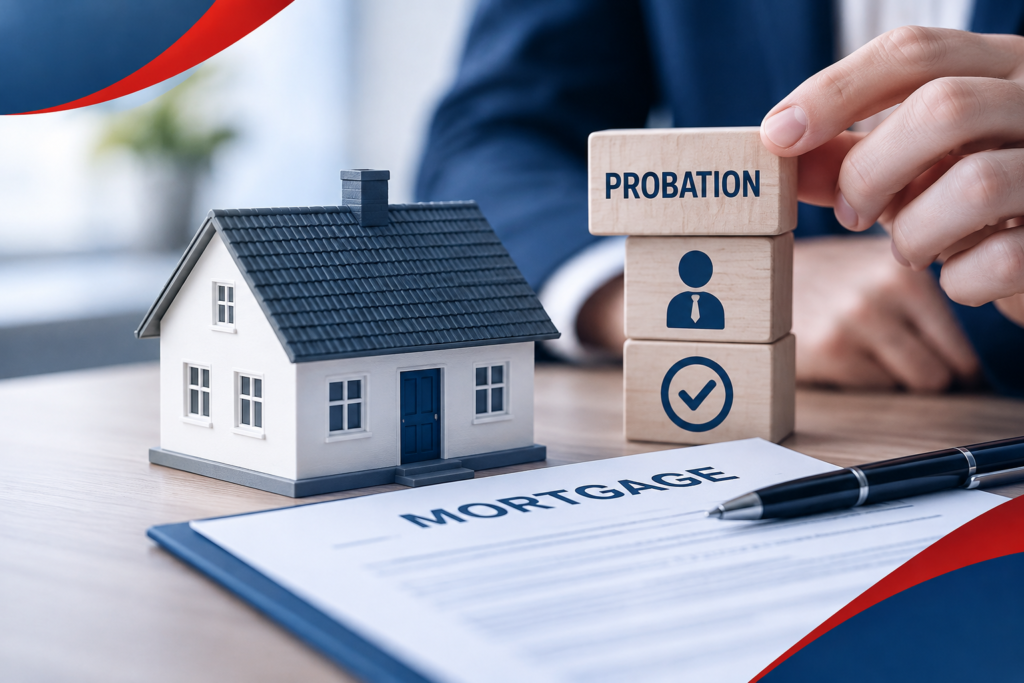
Being on probation doesn’t automatically rule you out from getting a mortgage, but it can make the process a little tougher.
UK mortgage lenders want to see evidence of stable income and employment, so they may apply stricter criteria or ask for a bigger deposit if you are applying for a mortgage while on probation.
Whether you’re applying for a residential mortgage, buy-to-let mortgage, fixed-rate mortgage, or variable-rate mortgage, understanding how your probation period may affect your application can help you prepare.
Residential Mortgages While on Probation
If you are applying to buy your main home, some high street and specialist lenders may accept applications from those on probation but usually with extra conditions.
For example:
- You may need a bigger deposit, such as 15–25%, to show financial stability.
- You may face higher interest rates.
- You may be limited to certain mortgage products depending on the lender’s criteria.
- Your lender may want additional evidence of your income and employment history.
Mortgage criteria vary between lenders, which is why being on probation does not necessarily mean your application will be declined.
Buy-to-Let Mortgages While on Probation
If you want to borrow to rent out a property, lenders may be even more cautious.
Buy-to-let mortgages are typically based on the rental income the property can generate, but lenders may also want to see that the borrower has a secure income to cover any shortfalls.
Being on probation could make it harder to get approved, especially if you have a short employment history.
Residential vs Buy-to-Let Mortgages on Probation
| Mortgage Type | What Lenders May Consider |
|---|---|
| Residential Mortgage | Current salary, employment history, probation period, deposit, credit history and affordability |
| Buy-to-Let Mortgage | Rental income, personal income, employment stability, existing commitments and deposit |
| Fixed-Rate Mortgage | Eligibility will depend on the individual lender’s criteria and your overall circumstances |
| Variable/Tracker Mortgage | Availability will depend on lender criteria, affordability and your financial circumstances |
Fixed vs Variable Rate Mortgages and Probation
Lenders assess mortgage applications differently depending on your employment circumstances, affordability and their own lending criteria.
Someone who is still within a probation period may have access to different mortgage options depending on the lender.
Fixed-Rate Mortgages
A fixed-rate mortgage keeps your mortgage interest rate fixed for an agreed period.
Your eligibility while on probation will depend on factors including:
- Your employment history
- Your current salary
- Your deposit
- Your credit history
- Your affordability
- The lender’s individual criteria
Variable or Tracker Rate Mortgages
Variable or tracker mortgages have interest rates that can change.
The mortgage products available to someone on probation will depend on the lender’s criteria and the borrower’s individual financial circumstances.
Real-Life Example 1: Residential Mortgage on Probation
Sarah recently started a new job as a marketing coordinator. She wants to buy her first home but is still within her 4-month probation period.
Sarah has:
- A steady income
- A good credit score
- A new permanent role
- A deposit available for her first home
What happened?
Sarah approached a mortgage adviser who helped her find a lender willing to consider her application.
She was asked to provide:
- Proof of income
- A reference from her new employer
- Information about her employment status
She opted for a 15% deposit and was approved for a variable-rate mortgage.
In Sarah’s case, being on probation did not stop her, but she needed professional advice and a bit more deposit upfront.
Real-Life Example 2: Buy-to-Let Mortgage on Probation
Tom is an accountant who wants to buy a flat to rent out.
He switched jobs recently and is on a 6-month probation period. Tom also has an existing mortgage on his current home.
What happened?
Tom found that many buy-to-let lenders wanted a stronger employment history.
Because his employment was too new, Tom was advised to wait and build a track record or provide a larger deposit and proof of strong savings.
Tom decided to wait six months, pass his probation, and then apply again improving his chances significantly.
Tips for Applying for a Mortgage While on Probation
If you are considering applying for a mortgage during your probation period, preparation can help strengthen your application.
1. Get Professional Mortgage Advice
Speaking to a mortgage adviser at BSL Financials can help you understand which lenders may be more flexible about probation periods and how best to present your application.
A mortgage adviser can help assess:
- Your employment situation
- Your income
- Your deposit
- Your credit history
- Your affordability
- Suitable lender criteria
2. Save a Larger Deposit
A bigger deposit reduces the amount you need to borrow and may improve the strength of your mortgage application.
If possible, building a larger deposit while you are on probation may give you access to more mortgage options.
3. Provide Full Documentation
Prepare the documents that a lender may need to assess your application.
These could include:
- Recent payslips
- Bank statements
- Employment contract
- A written reference from your employer confirming your job role and status
- Proof of previous stable employment
- Proof of your deposit
Having your documents ready can help make the mortgage application process smoother.
4. Consider Waiting Until After Probation
If possible, waiting until you’ve passed probation usually around 3–6 months, depending on your employer may improve your employment stability.
However, you do not always have to wait until your probation period has finished.
Some mortgage lenders may still consider your application depending on your circumstances.
5. Keep Your Credit Healthy
Even if you are on probation, maintaining a healthy credit history can help strengthen your overall mortgage application.
Lenders may consider factors such as:
- Your repayment history
- Existing debts
- Credit commitments
- Recent credit applications
- Overall affordability
What If You’re Self-Employed or Have Variable Income?
If probation applies to a self-employed contract or freelance work, lenders may look at your business accounts and earnings over previous years.
Being “on probation” isn’t the same for self-employed mortgage applicants but if your income is unstable, this can still pose challenges.
Self-employed applicants may need to provide evidence such as:
- Business accounts
- Tax calculations
- Tax year overviews
- Bank statements
- Evidence of ongoing income
The exact requirements depend on the lender and your individual circumstances.
Mortgage on Probation: Key Points
| Factor | Why It Matters |
|---|---|
| Employment Status | Lenders want to understand how secure and sustainable your income is |
| Probation Period | Some lenders accept probation, while others have stricter criteria |
| Deposit | A larger deposit may strengthen your overall application |
| Income | Your income is used when assessing mortgage affordability |
| Credit History | A healthy credit history can support your application |
| Previous Employment | A stable employment history may give lenders additional confidence |
| Documentation | Payslips, contracts and employer references may be required |
Final Thoughts
Being on probation doesn’t automatically rule you out from getting a mortgage, but it can make the process a little tougher.
Lenders want to see evidence of stable income and employment, so they may apply stricter criteria or ask for bigger deposits.
Whether you’re applying for a residential or buy-to-let mortgage, fixed or variable rates, the key is to understand how probation affects lenders’ decisions and prepare accordingly.
Getting professional guidance can make a real difference.
Need Help Navigating Mortgages While on Probation?
At BSL Financials, we specialise in helping UK borrowers understand their mortgage options and find the right deal even if you’re on probation or have unusual circumstances.
Contact us today for a free initial chat about your mortgage goals and how to improve your chances of success.
Your home may be repossessed if you do not keep up repayments on your mortgage.